Frequently Asked Questions
We will do our best to answer any questions about the different modalities offered at Soultuary Wellness Center. If you cannot find an answer to your question please email us at info@soultuary.ca and we will do our best to get your question answered and add to our FAQ page.
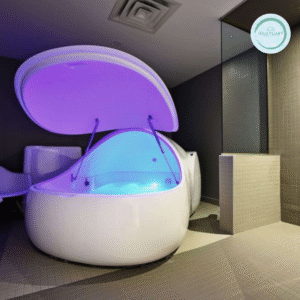
A modern sensory deprivation float pod with a partially open lid emits soft purple light, situated in a sleek, tiled room with minimal decor. A circular SoulTuary logo appears in the top right corner.
A Return to Weightless Stillness
Imagine entering a warm, womb-like pod filled with 1,000 pounds of dissolved Epsom salts. You lie back, suspended effortlessly, and within moments, your body begins to let go—of stress, gravity, stimulation, and time. This is float therapy: a practice rooted in neuroscience, supported by clinical research, and experienced as deeply restorative by those who seek stillness in a noisy world.
Float therapy—also known as Restricted Environmental Stimulation Therapy (REST)—was pioneered in the 1950s by Dr. John C. Lilly, a neuropsychiatrist interested in consciousness and altered states. Since then, it has evolved into a wellness modality that bridges science and serenity.
The float tank, or sensory deprivation chamber, is a soundproof, lightproof space filled with water heated to skin temperature (approx. 35°C/93.5°F) and saturated with magnesium sulfate (Epsom salt). This environment eliminates nearly all external input—gravity, light, sound, and even temperature—allowing the nervous system to downshift into a deep parasympathetic state, also known as “rest and digest.”
With sensory input minimized, the brain slows its processing, cortisol levels decrease, and the body enters a state of profound physiological relaxation. In this stillness, the mind begins to quiet, the muscles soften, and the inner world becomes more accessible.
Far from being passive, floating is a highly active recalibration of the nervous system—one that has captured the attention of biohackers, professional athletes, wellness seekers, and trauma survivors alike.
“What we’re finding is that floatation-REST has robust effects on stress, anxiety, and pain… with minimal side effects.”
— Dr. Justin Feinstein, Clinical Neuropsychologist, Laureate Institute for Brain Research
In the pages ahead, we’ll explore why float therapy is emerging as a pillar of holistic healing—supporting the body, mind, and soul—and how regular sessions can lead to lasting transformation.
Resources:
Feinstein et al. (2018). Floatation-REST as a stress-reduction intervention for anxiety and depression.
Bood et al. (2006). Efficacy of flotation-REST in chronic pain and muscle tension.
Kjellgren & Westman (2014). Beneficial effects of treatment with sensory isolation in flotation-tank as a preventive health-care intervention.
A modern sensory deprivation float pod with a partially open lid emits soft purple light, situated in a sleek, tiled room with minimal decor. A circular SoulTuary logo appears in the top right corner.
Relief, Recovery, and Rejuvenation
The human body is remarkably adaptive—yet in today’s world, it’s also constantly under siege. From stress-induced inflammation to overworked muscles and restless sleep, our physical systems are often operating in survival mode. Float therapy offers a profound shift: not merely a break from the outside world, but a biological invitation to heal.
Easing Chronic Pain and Muscle Tension
Research shows that floating can significantly reduce chronic pain, including conditions such as fibromyalgia, arthritis, and neck/back pain. One landmark study by Bood et al. (2006) found that after just twelve sessions, patients with chronic muscle tension reported both immediate and long-lasting pain reduction, improved mobility, and decreased need for analgesic medications.
The weightlessness of the float environment eliminates pressure on joints and the spine, while the high magnesium concentration (thanks to over 1,000 pounds of Epsom salts) assists in reducing inflammation and supporting muscular relaxation. Magnesium, absorbed transdermally, plays a crucial role in muscle recovery, nerve function, and energy production—making floating a recovery ritual of choice for athletes and fitness enthusiasts alike.
“Floating is like a massage for your nervous system and your fascia—without anyone touching you.”
— Wellness Coach & Float Enthusiast
Improved Sleep and Restorative Physiology
As the body relaxes into the parasympathetic state, brainwaves shift into theta frequency—the same state experienced during deep meditation or early stages of sleep. According to research by Kjellgren and Westman (2014), regular floaters report significant improvements in sleep quality, with some experiencing resolution of long-term insomnia.
The body’s natural healing processes—cell regeneration, hormone balancing, tissue repair—are optimized during sleep. By facilitating deeper rest, float therapy amplifies the body’s natural healing intelligence.
Support for Cardiovascular & Lymphatic Systems
Floating enhances circulation by relaxing vascular tension and improving blood flow to peripheral tissues. It also gently stimulates the lymphatic system—supporting detoxification and immune health. For individuals with high blood pressure or stress-induced cardiac symptoms, float therapy provides a safe, non-pharmacological intervention to regulate physiological markers.
In essence, float therapy is not just an escape from physical discomfort—it is a return to balance. Through its unique ability to suspend the body and still the world, floating offers one of the few modern practices that nourishes the nervous system while giving the body what it craves most: deep, uninterrupted rest.
A modern sensory deprivation float pod with a partially open lid emits soft purple light, situated in a sleek, tiled room with minimal decor. A circular SoulTuary logo appears in the top right corner.
Restoring Clarity, Calm, and Cognitive Function
In a world defined by noise, stimulation, and speed, the mind rarely gets a moment of true rest. Our mental health is shaped not just by what we think—but by how often we get to not think. In this rare space of stillness, float therapy becomes more than a relaxation technique—it becomes a sanctuary for the brain.
Reduces Stress, Anxiety, and Cortisol Levels
Scientific studies have consistently shown that floatation REST has powerful effects on stress-related symptoms. In a 2018 study led by Dr. Justin Feinstein at the Laureate Institute for Brain Research, a single one-hour float session resulted in significant reductions in state anxiety, muscle tension, and blood pressure across a sample of individuals with high levels of anxiety and stress (Feinstein et al., 2018).
The floating environment cues the parasympathetic nervous system—our rest-and-digest mode—while suppressing the sympathetic fight-or-flight response. Cortisol levels drop. Heart rate slows. Breathing deepens. And the mind begins to unwind without effort.
“In that space, the mind doesn’t have to do anything. It just gets to be.”
— Clinical Float Participant
Supports Trauma Recovery and PTSD Relief
Float therapy also holds profound potential for those navigating trauma and post-traumatic stress. According to Feinstein’s research, individuals with PTSD reported increased interoceptive awareness (the ability to sense internal bodily states) and improved emotional regulation after floating. For trauma survivors, regaining this awareness is foundational to healing.
When trauma lives in the body, it’s not always accessible through traditional talk therapy. Floating offers a non-verbal, embodied path to safety—one where the nervous system can begin to rewire itself in a non-triggering environment.
Enhances Creativity, Focus, and Cognitive Clarity
The sensory reduction of floating frees up brain resources typically spent managing external stimuli. As a result, floaters often experience enhanced mental clarity, creative breakthroughs, and a sense of spacious awareness.
Studies have suggested that float therapy improves performance on tasks involving memory, problem-solving, and artistic thinking. It’s no surprise that writers, designers, entrepreneurs, and executives increasingly use float sessions as part of their mental performance toolkit.
Promotes Mindfulness and Present Awareness
The float tank acts as a natural amplifier for mindfulness. Without the distractions of sight, sound, and touch, the mind settles into the present moment. For individuals who struggle with meditation, floating becomes a shortcut to presence—helping them access states of calm and clarity that might otherwise take years of disciplined practice to achieve.
Float therapy is not just about quieting the mind—it’s about liberating it. In a single hour, the mind moves from chaos to coherence. With regular practice, it becomes not just an escape—but a return to the self.
A modern sensory deprivation float pod with a partially open lid emits soft purple light, situated in a sleek, tiled room with minimal decor. A circular SoulTuary logo appears in the top right corner.
A Sanctuary for Stillness and Spiritual Restoration
There is a dimension to healing that can’t be measured in lab results or muscle scans. It’s the ache we feel when we’re disconnected from ourselves—the inner exhaustion that no nap can fix. This is where float therapy transcends science and becomes something more: a sacred practice of coming home to the soul.
In a world driven by doing, floating offers permission to simply be. No performance. No pressure. Just presence.
A Space to Feel What’s Been Suppressed
Floating creates a safe, sensory-neutral space for emotions to rise gently to the surface. Many floaters describe experiencing emotional catharsis—a soft release of tension, grief, or tears—without needing to understand or explain where it came from. The body knows what needs to move. The float environment offers the stillness to let it happen.
For individuals navigating grief, loss, burnout, or emotional overwhelm, float therapy becomes a deeply personal ritual. It offers a non-judgmental container for emotional processing, allowing space for truth to emerge—quietly, gently, and without interruption.
“In the stillness of the float tank, I met myself in a way I never had before.”
— Journal entry from a first-time floater
Accessing Inner Wisdom and Intuition
When external noise fades, internal wisdom has a chance to speak. Many people describe feeling a heightened sense of intuition or insight during their floats—like their inner compass becomes louder and more trustworthy. The altered state induced by sensory deprivation is not unlike meditation or breathwork; it opens the door to theta brainwave states, often associated with dreamwork, inner vision, and subconscious integration.
For seekers, healers, and introspective souls, floating becomes more than wellness—it becomes a spiritual practice.
Reconnection with the Bigger Picture
In the absence of stimulation, the mind begins to explore new territory. Some report a sense of cosmic connection—what mystics might call oneness or transcendence. Others experience nothing more than deep peace. Both are sacred.
Float therapy invites us to shift from the external pursuit of meaning to the internal experience of connection. And in a culture addicted to distraction, this kind of reconnection is radical.
Healing Through Presence
Floating doesn’t solve our problems. It doesn’t offer advice or affirmations. What it does is give us the space to witness ourselves—without filters, without judgment. And that kind of presence? That’s where real healing begins.
At Soultuary Wellness Center, we believe healing is not just physical or mental—it’s soul-deep. Float therapy is one of the rare modalities that honors all three. It grounds the body, quiets the mind, and holds the soul in stillness.
A modern sensory deprivation float pod with a partially open lid emits soft purple light, situated in a sleek, tiled room with minimal decor. A circular SoulTuary logo appears in the top right corner.
Building a Float Practice for Lifelong Wellness
Like all powerful healing modalities, float therapy delivers its most profound benefits not in a single session—but in sustained rhythm. The first float is often revelatory. The third deepens the effect. By the fifth or sixth, something subtle yet permanent begins to shift. You begin to remember how peace feels in your body.
Why Regular Floating Works
The nervous system thrives on safe repetition. Each float session teaches your body and brain that it’s safe to soften, safe to rest, safe to let go. Over time, the cumulative impact of regular floating leads to:
- Lower baseline stress levels
- Increased emotional regulation
- Improved sleep architecture
- Reduced pain and inflammation
- Sharper mental clarity and focus
- Deeper spiritual awareness
Clinical studies have confirmed that consistent float therapy improves long-term outcomes in anxiety reduction, pain management, and sleep enhancement (Feinstein et al., 2018; Bood et al., 2006; Kjellgren & Westman, 2014). Like meditation or yoga, it becomes a practice that rewires the body and brain for resilience.
“The magic isn’t just in the float. It’s in the ritual.”
— Holistic Wellness Educator
Creating Your Float Ritual
For general wellness, a weekly or bi-weekly float is ideal. This cadence allows your nervous system to regulate, your muscles to recover, and your mind to recalibrate in regular intervals. For chronic conditions (such as fibromyalgia, anxiety, or PTSD), initial benefits may be more noticeable with 2–3 floats per week for the first month.
Many clients choose to pair float sessions with complementary therapies such as:
- Red light therapy (to reduce inflammation and support skin and cellular health)
- Cold plunge therapy (to build nervous system resilience and metabolic health)
- Infrared sauna (to support detoxification and cardiovascular function)
- Breathwork or Reiki (to deepen emotional release and energetic alignment)
This integrative approach to wellness makes floating not just a luxury—but a core pillar of modern self-care.
An Invitation to Begin
At Soultuary Wellness Center, we don’t believe in quick fixes—we believe in embodied, whole-person healing. Our float memberships are designed to support your journey with accessibility, flexibility, and care. Whether you’re a first-timer or a lifelong seeker, we invite you to discover what’s possible when you unplug from the world… and plug back into yourself.
References
- Bood, S. Å., Sundequist, U., Kjellgren, A., Nordström, G., & Norlander, T. (2006). Eliciting the relaxation response with the help of flotation-REST (Restricted Environmental Stimulation Technique) in patients with stress-related ailments. International Journal of Stress Management, 13(2), 154–175.
- Feinstein, J. S., Khalsa, S. S., Yeh, H., Wohlrab, C., Simmons, W. K., Stein, M. B., & Paulus, M. P. (2018). Examining the short-term anxiolytic and antidepressant effect of Floatation-REST. PLoS ONE, 13(2), e0190292.
Kjellgren, A., & Westman, J. (2014). Beneficial effects of treatment with sensory isolation in flotation-tank as a preventive health-care intervention – a randomized controlled pilot trial. BMC Complementary and Alternative Medicine, 14, 417.
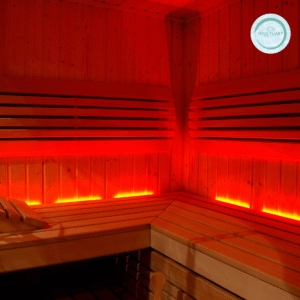
A wooden sauna room with warm red lighting under the benches, creating a cozy atmosphere. The walls and benches are made of smooth wood, and a round Soul Tuary logo is visible on the wall.
A Modern Ritual of Deep Heat and Cellular Healing
Step into warmth—not the scalding, breath-stealing kind—but a gentle, penetrating heat that wraps around your body like a second skin. Within minutes, your muscles soften, your breath slows, and something ancient awakens in your cells: the invitation to release, restore, and regenerate.
Welcome to infrared sauna therapy—a modern wellness practice rooted in ancient heat traditions, now refined with cutting-edge technology to support detoxification, recovery, and whole-person healing.
Unlike traditional saunas that heat the air around you, infrared saunas use light wavelengths to warm the body directly. This creates a deeply therapeutic experience at lower temperatures (typically 110°F to 140°F), making it more comfortable—and often more effective—for a wider range of people.
Understanding the Light Spectrum
Infrared light is invisible to the human eye but felt as heat. It is divided into three categories:
- Near Infrared (NIR): Penetrates the skin’s surface to promote wound healing, collagen production, and skin renewal.
- Mid Infrared (MIR): Reaches deeper tissues, supporting pain relief, improved circulation, and inflammation reduction.
- Far Infrared (FIR): Penetrates up to 1.5 inches into the body, stimulating detoxification, metabolic function, and relaxation.
Most premium infrared saunas—including those offered at Soultuary Wellness Center—use a full-spectrum approach, delivering all three wavelengths for a complete therapeutic effect.
How It Works
As your body absorbs the infrared heat, core temperature rises gradually. In response, the body initiates a natural cooling process: blood vessels dilate, heart rate increases, and sweat glands activate. But this is more than just sweat—this is cellular activation.
Infrared sauna therapy has been shown to increase circulation, boost mitochondrial activity, and enhance oxygen delivery throughout the body. The result? A treatment that feels luxurious, but works on the deepest biological levels.
“Infrared sauna is like passive cardio for your cells. You lie still… and yet every system of your body is working toward balance.”
— Integrative Health Practitioner
In the pages ahead, we’ll explore how this simple act of sitting in light can help detoxify the body, calm the mind, and nurture the soul. Whether you’re seeking pain relief, emotional restoration, or radiant skin, infrared sauna therapy meets you where you are—and elevates your health from the inside out.
A wooden sauna room with warm red lighting under the benches, creating a cozy atmosphere. The walls and benches are made of smooth wood, and a round Soul Tuary logo is visible on the wall.
Detox, Recovery, and Radiant Vitality
There is something elemental about sweating—an ancient ritual practiced across cultures, used not just for cleansing the body, but for clearing the path to vitality. In the context of modern wellness, infrared sauna therapy refines this primal process, offering targeted, deeply penetrating heat that supports the body’s natural intelligence to heal, restore, and optimize.
Deep Detoxification at the Cellular Level
Sweating is one of the body’s most powerful detox pathways—but not all sweat is equal. Infrared heat penetrates tissues and raises the core body temperature, which prompts a sweat response that is up to seven times more detoxifying than traditional saunas. According to a study published in the Journal of Environmental and Public Health (2012), sweat produced in infrared environments has been shown to carry higher levels of heavy metals like arsenic, lead, and mercury, as well as chemical compounds such as phthalates and BPA.
This form of detoxification supports liver and kidney function, reduces the toxic burden on the body, and is particularly beneficial for individuals navigating chronic fatigue, environmental sensitivities, or inflammation-related conditions.
Pain Relief, Muscle Recovery, and Inflammation Reduction
Infrared heat stimulates blood flow and oxygenation in the muscles, accelerating recovery after workouts, injury, or physical stress. A clinical trial published in Clinical Rheumatology (2009) found that participants with rheumatoid arthritis and ankylosing spondylitis reported decreased pain and stiffness after just a few infrared sauna sessions, with no adverse effects.
Additionally, increased circulation reduces lactic acid buildup and supports myofascial release, making it a favorite among athletes and those with chronic pain conditions such as fibromyalgia, sciatica, or arthritis.
Infrared therapy also appears to reduce markers of systemic inflammation by modulating immune responses—something critical for preventing and managing disease long-term.
Cardiovascular Conditioning and Metabolic Support
Stepping into an infrared sauna is not unlike engaging in a gentle workout. As the body warms, heart rate increases and blood vessels dilate, mimicking the effects of moderate aerobic exercise. A study in JAMA Internal Medicine (2015) revealed that regular sauna use (including infrared models) was associated with a significantly reduced risk of cardiovascular mortality, stroke, and all-cause mortality.
The heat stress activates heat shock proteins, compounds that help regulate insulin sensitivity, cellular repair, and metabolic efficiency. For individuals managing metabolic disorders or looking to support weight management, infrared sauna therapy becomes more than a comfort—it becomes a strategic health intervention.
Skin Rejuvenation and Collagen Boost
Beyond its systemic benefits, infrared therapy also improves what we see in the mirror. Near-infrared wavelengths stimulate collagen production, reduce fine lines, and promote faster healing of scars and blemishes. Increased circulation to the skin brings nutrients to the surface and helps flush out impurities, resulting in clearer, more radiant skin over time.
A 2006 study in Photomedicine and Laser Surgery found that near-infrared therapy improved skin texture, tone, and elasticity in just 12 weeks, offering a non-invasive alternative to aggressive cosmetic procedures.
Infrared sauna therapy is a masterclass in whole-body optimization—gentle, non-invasive, and remarkably effective. It’s not just about heat. It’s about reclaiming your body’s ability to thrive—one session at a time.
A wooden sauna room with warm red lighting under the benches, creating a cozy atmosphere. The walls and benches are made of smooth wood, and a round Soul Tuary logo is visible on the wall.
Calm the Noise, Reset the Nervous System
Wellness is rarely just physical. Mental fatigue, overstimulation, and emotional overwhelm are just as taxing—if not more so—on the human system. Infrared sauna therapy offers a unique sanctuary: not just for detoxing the body, but for recalibrating the mind.
In the gentle warmth of infrared heat, the mind slows down. The breath deepens. And the nervous system begins to shift from sympathetic overdrive into the parasympathetic state—one of calm, clarity, and cognitive reset.
Stress Reduction and Cortisol Regulation
The physiological stress response—marked by elevated cortisol, rapid heart rate, and shallow breathing—is designed to keep us alive in emergencies. But when it becomes the default setting, it quietly erodes health.
Infrared sauna sessions have been shown to lower cortisol levels and promote deep relaxation. A 2005 study published in Psychosomatic Medicine demonstrated that regular sauna use led to a significant reduction in self-reported stress and improved subjective well-being. Heat exposure works as a “thermal reset,” helping the body break free from chronic stress loops.
Unlike the sharp intensity of traditional saunas, infrared heat is soothing and sustainable, making it easier for the nervous system to respond with trust rather than resistance.
Improved Sleep Quality and Circadian Regulation
Regular infrared sauna use has been associated with deeper, more restorative sleep. The post-sauna cooling effect mirrors the body’s natural thermoregulation process before sleep, helping to signal melatonin release and supporting the circadian rhythm.
For those with insomnia or irregular sleep patterns, the consistent use of infrared therapy in the evening may help reset the internal clock—making it easier to fall asleep, stay asleep, and wake feeling refreshed.
Mood Elevation and Brain Chemistry Balancing
Infrared sauna therapy stimulates the release of endorphins, dopamine, and serotonin—neurochemicals responsible for mood, pleasure, and motivation. This biochemical effect can lead to natural mood elevation and has even been linked to improved outcomes in individuals with depression and seasonal affective disorder (SAD).
A 2016 study in JAMA Psychiatry found that whole-body hyperthermia (similar in principle to infrared sauna use) produced significant antidepressant effects in individuals with major depressive disorder. Participants reported improvements in mood lasting up to six weeks after a single session.
This natural rebalancing of brain chemistry offers a gentle, non-pharmaceutical alternative for those seeking emotional regulation and mental clarity.
Cognitive Clarity and Mental Reset
Beyond mood, the infrared sauna provides a rare cognitive exhale—a moment when mental chatter quiets and focus returns. With reduced inflammation, improved circulation to the brain, and parasympathetic activation, the mind becomes more present, alert, and resilient.
Many people report that their best ideas surface after a session—likely a result of reduced stress and the enhanced alpha and theta brainwave states associated with relaxation and creativity.
Reconnection Through Stillness and Heat
True healing lives beyond the physical. It is felt in the still, sacred moments when we finally hear ourselves again—beyond the noise, beyond the narrative, beyond the daily push to be productive. For many, the infrared sauna becomes a portal to presence—a space not just to sweat, but to release what’s no longer needed on a soul level.
As the outer layers soften—tension, distraction, adrenaline—what’s beneath has a chance to rise. This is not just a detox for the body. It is a clearing for the heart.
Emotional Unloading in Safe Heat
Heat has long been used in rituals across cultures to move grief, clear emotion, and reconnect with inner truth. In the privacy and silence of an infrared sauna, emotions are allowed to surface without judgment. Tears are not uncommon. Nor is laughter. The warmth wraps around the nervous system like an embrace, creating the safety needed for emotional layers to dissolve gently—not be forced out.
Infrared heat’s ability to access deep tissues is mirrored in its ability to access deeper truths. Clients often describe it as “a release I didn’t even know I needed.”
Stillness as a Spiritual Practice
There is a spiritual quality to surrendering to heat. In a world defined by stimulation, the decision to sit in quiet warmth becomes a revolutionary act. The body slows. The breath deepens. Thought softens into awareness. The boundaries between body and being begin to blur.
For some, the infrared sauna becomes a meditation chamber—a space where insights, prayers, and intentions can rise without effort. With no devices, no expectations, and no distractions, it becomes a place to reconnect with your own inner guidance.
“There’s something sacred about sweating in silence. It strips away what isn’t you and brings you back to what is.”
— Reflective Journal Entry, Infrared Sauna Client
Energy Alignment and Subtle Body Healing
Many holistic practitioners believe infrared therapy also supports the energetic body—helping to balance and realign subtle systems such as the chakras or meridians. Heat is known to increase the flow of energy (or qi/prana) in traditional Eastern medicine, promoting clarity, flow, and emotional release.
Whether one sees this through the lens of biochemistry or biofield, the lived experience remains: people emerge lighter. More grounded. More aligned.
Reclaiming Your Inner Space
When you enter the infrared sauna, you’re not just entering a wellness tool. You’re entering a sacred pause—a deliberate return to yourself. And sometimes, that’s all the soul needs: space, warmth, and the permission to let go.
Infrared sauna therapy isn’t just about healing what’s wrong. It’s about remembering what’s right. About reconnecting with the wisdom, rhythm, and radiance already within you.
A wooden sauna room with warm red lighting under the benches, creating a cozy atmosphere. The walls and benches are made of smooth wood, and a round Soul Tuary logo is visible on the wall.
The Ritual of Radiance
Infrared sauna therapy is not just a luxury—it’s a ritual of renewal. And like all rituals, its greatest power lies in consistency. One session can leave you feeling refreshed. But a steady rhythm of practice? That’s where the transformation lives.
Regular use of infrared therapy creates a cumulative effect—building resilience in the body, clarity in the mind, and softness in the soul. Over time, inflammation decreases. Sleep deepens. The nervous system adapts to relaxation. The body learns to release more easily. The mind starts to seek stillness. And the soul finds comfort in the warmth.
Why Consistency Matters
The body responds to rhythm. Just as hydration, movement, and breathwork require frequency to be effective, so too does thermal healing. With consistent use—typically 2 to 4 times per week—clients begin to notice:
- Increased baseline energy and metabolism
- Enhanced immune function and reduced illness
- Reduced chronic pain and muscle tension
- Improved mental health outcomes and emotional stability
- Clearer skin, deeper sleep, and sustained focus
It becomes more than self-care. It becomes self-anchoring.
Creating a Personal Sauna Practice
Whether you come to infrared therapy for physical pain, emotional clearing, or quiet contemplation, you are building something sacred: a relationship with your own well-being.
A few suggestions for building your practice:
- Begin with 3 sessions a week for the first month to optimize detox and nervous system reset
- Pair sauna sessions with hydration rituals and mineral replenishment to support cleansing
- Add journaling or meditation post-session to integrate the experience emotionally or spiritually
- Choose a consistent time—mornings to energize, evenings to calm—to reinforce the nervous system’s pattern of restoration
Synergy with Other Modalities
At Soultuary Wellness Center, we believe true wellness is integrative. Infrared sauna therapy pairs beautifully with:
- Float therapy for deep nervous system recalibration
- Cold plunge therapy to stimulate resilience through contrast
- Red light therapy to enhance cellular function and skin health
- Massage or breathwork to move emotional and energetic blockages
This multi-layered approach supports healing not just in the body, but across every layer of being.
An Invitation to Embody Radiance
We designed Soultuary as a sanctuary for healing—where ancient wisdom meets modern science, and where every service honors the full spectrum of who you are: physical, emotional, and spiritual. Our infrared sauna offerings are available as single sessions, curated packages, or part of your all-inclusive membership, giving you the flexibility to build a practice that works for your lifestyle.
You don’t have to earn your rest. You don’t have to justify your healing.
You are worthy of warmth. Regularly. Intentionally. Radiantly.
References
- Beever, R. (2010). Far-infrared saunas for treatment of cardiovascular risk factors: summary of published evidence. Canadian Family Physician, 56(7), 691–696.
- Laukkanen, T., et al. (2015). Sauna bathing is associated with reduced cardiovascular mortality and improved longevity. JAMA Internal Medicine, 175(4), 542–548.
- Hussain, J., & Cohen, M. (2018). Clinical effects of regular sauna bathing: a systematic review. Evidence-Based Complementary and Alternative Medicine, 2018, 1857413.
- Hanusch, K. U., et al. (2006). Effect of whole-body hyperthermia on depressive symptoms in major depressive disorder. JAMA Psychiatry, 73(8), 789–795.
- Genuis, S. J., & Birkholz, D. (2012). Blood, urine, and sweat (BUS) study: monitoring and eliminating toxins. Journal of Environmental and Public Health, 2012, 1–10.
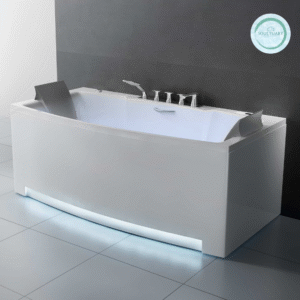
Modern white bathtub with sleek design, metallic fixtures, and built-in headrests, set against a dark tiled wall. Soft LED lighting glows from the base, creating a relaxing ambiance.
A Practice of Presence, Power, and Physiological Reset
Imagine stepping into icy water—your breath catches, your body jolts, and every cell in your system lights up with awareness. In that moment, your mind stills. You are fully here. Fully alive. That is the essence of cold plunge therapy.
Cold plunge therapy—also known as cold water immersion (CWI)—is the practice of submerging the body into water cooled typically between 4°C and 15°C (39°F to 59°F) for a short duration, most often between 1 to 5 minutes. While the experience can be intense, it is also deeply invigorating—one of the few practices that stimulates every major system in the body and immediately shifts the nervous system into adaptation mode.
Far from a wellness trend, cold water therapy is steeped in ancient traditions. From Nordic ice baths and Japanese Misogi rituals to the sacred rivers used in Ayurvedic purification, the cold has always been seen as a force of transformation—a threshold between discomfort and clarity, contraction and expansion.
Today, modern science is catching up with ancient wisdom. Studies have shown that cold immersion activates a cascade of physiological benefits: reduced inflammation, increased dopamine levels, enhanced immune function, and improved metabolic health. But its benefits go deeper—into the realms of mental resilience, emotional regulation, and spiritual clarity.
Unlike floating or infrared heat, which soothe the body into relaxation, cold plunging challenges the system. It’s not passive—it’s a deliberate choice to meet discomfort with breath, to override reactivity with intention. And in doing so, something profound begins to shift—not just in your physiology, but in your perspective.
“You don’t just build a stronger body in the cold. You build a stronger mind.”
— Cold Immersion Facilitator
At Soultuary Wellness Center, we offer guided and self-directed cold plunge experiences designed to meet you at your current threshold—and support you in expanding it, one breath at a time.
Modern white bathtub with sleek design, metallic fixtures, and built-in headrests, set against a dark tiled wall. Soft LED lighting glows from the base, creating a relaxing ambiance.
Resilience Rooted in Physiology
At first glance, cold plunge therapy may seem like an act of discomfort. But beneath that initial shock lies one of nature’s most potent catalysts for physical transformation. In just a few minutes of cold immersion, your body activates a survival-driven cascade of healing processes—fine-tuned over thousands of years to restore, protect, and elevate physical function.
Inflammation Reduction and Muscle Recovery
Perhaps the most widely recognized benefit of cold plunging is its ability to reduce inflammation—a root cause of pain, fatigue, and chronic disease. Exposure to cold constricts blood vessels and slows metabolic activity, helping reduce swelling in joints, tendons, and muscles. When the body warms again post-immersion, blood flow rebounds with increased oxygen and nutrient delivery to tissues—accelerating repair and regeneration.
A 2016 meta-analysis published in Frontiers in Physiology confirmed that cold water immersion significantly improves recovery of muscle power and reduces soreness following high-intensity exercise. It’s why elite athletes and performance coaches worldwide have embraced this practice.
Pain Management and Nervous System Repatterning
Cold plunges influence the body’s nociceptive pathways—the systems that detect and process pain. Immersion in cold water can temporarily dull pain receptors and increase production of endorphins, the body’s natural painkillers. This effect has shown promise for individuals managing chronic pain, migraines, or autoimmune conditions like fibromyalgia.
Moreover, cold immersion has been shown to stimulate the vagus nerve, which plays a key role in reducing systemic inflammation and rebalancing the autonomic nervous system—a foundational piece in managing chronic illness.
Immune System Activation
Cold exposure doesn’t just suppress inflammation—it stimulates immune function. A widely cited Dutch study conducted by Kox et al. (2014) found that participants trained in cold exposure techniques exhibited a significantly stronger immune response to a bacterial endotoxin compared to controls. The findings suggest that cold exposure enhances the body’s ability to modulate inflammation and resist illness.
Regular cold plunges may increase white blood cell count, improve lymphatic circulation, and help strengthen the body’s natural defenses against pathogens—particularly when paired with movement, hydration, and proper recovery protocols.
Metabolism and Brown Fat Activation
When exposed to cold, the body recruits brown adipose tissue (brown fat)—a metabolically active tissue that generates heat by burning calories. Over time, repeated cold exposure enhances brown fat activity and may improve glucose regulation, insulin sensitivity, and weight management.
According to a study published in The New England Journal of Medicine (2009), brown fat activation is associated with improved metabolic health and may play a role in combating obesity and type 2 diabetes.
“Cold plunging doesn’t just make you tougher—it makes your biology smarter.”
— Sports Medicine Expert
Cold plunge therapy is more than a recovery tool—it’s a form of physiological training. Every session reminds the body how to adapt, recover, and thrive under pressure. It’s the science of stress, applied with precision, and returned to the body as strength.
Modern white bathtub with sleek design, metallic fixtures, and built-in headrests, set against a dark tiled wall. Soft LED lighting glows from the base, creating a relaxing ambiance.
Strength Beyond the Surface
What begins as a physical challenge quickly reveals itself to be a mental one. As the body enters cold water, every instinct says get out. But when the breath slows and the mind anchors, something extraordinary happens: the body adapts—and the mind transforms.
Cold plunge therapy isn’t just about physical resilience—it’s about rewiring the nervous system to meet stress with clarity instead of chaos.
The Vagus Nerve and Nervous System Rebalancing
Cold water immersion activates the vagus nerve, a key regulator of the parasympathetic nervous system. With repeated exposure, the body learns to transition more easily from the fight-or-flight response into the rest-and-digest state. This ability to regulate stress—called vagal tone—is directly linked to emotional resilience, anxiety reduction, and improved heart rate variability (HRV), a biomarker of mental well-being and adaptability.
A 2018 review in Medical Hypotheses emphasized cold exposure’s role in improving parasympathetic function and enhancing recovery from stress-induced mental exhaustion.
Mood Boosting and Dopamine Surge
While many associate relaxation with warmth, cold immersion is increasingly being recognized as a natural antidepressant. A 2000 study in Medical Hypotheses found that cold showers and immersions could stimulate noradrenaline and beta-endorphin production—neurochemicals involved in regulating mood, attention, and alertness.
More recently, neuroscience researcher Dr. Andrew Huberman highlighted that cold water exposure can increase dopamine levels by up to 250%, with levels remaining elevated for hours post-immersion. This surge not only boosts mood but also enhances motivation, mental clarity, and focus—without the crash associated with stimulants or caffeine.
Reducing Symptoms of Anxiety and Depression
While cold plunging is not a cure-all, it offers meaningful support for those navigating mental health challenges. The intensity of cold immersion helps disrupt rumination loops common in anxiety and depression, grounding the mind in the present moment. Additionally, the controlled stress of cold exposure can act as hormetic stress—a low-level stressor that conditions the body and brain to respond more calmly to future stress.
Studies from the International Journal of Circumpolar Health (2000) suggest that regular winter swimming (a form of cold immersion) was associated with improved general well-being, decreased fatigue, and more positive mood in participants over time.
Building Mental Grit and Resilience
More than anything, cold plunging strengthens the mental muscle of choosing presence over panic. With each session, individuals practice interrupting a stress response through breath and awareness. Over time, this rewires the brain to approach discomfort with curiosity rather than fear—a powerful mindset shift that transfers into relationships, work, and daily life.
“If I can stay calm in freezing water, I can stay calm in a hard conversation. The cold trains my mind to stay.”
— Mental Performance Coach
The cold doesn’t just sharpen the mind—it shapes it. With each breath taken in discomfort, we learn that fear is a wave we can ride, not a wall we must fear. And in doing so, we cultivate a mind that is clearer, calmer, and infinitely more courageous.
Modern white bathtub with sleek design, metallic fixtures, and built-in headrests, set against a dark tiled wall. Soft LED lighting glows from the base, creating a relaxing ambiance.
The Courage to Feel, the Freedom to Let Go
There are moments in a cold plunge when time disappears. The body surrenders, the mind goes quiet, and something deeper comes online. It’s not about pushing through. It’s about meeting yourself—honestly, humbly, and without escape.
While science explains the physical and mental benefits of cold immersion, its impact on the emotional and spiritual self is equally profound. The cold is an unexpected teacher. It strips away distraction, dissolves ego, and brings us into contact with what’s real.
A Portal to Presence
Cold water offers no room for rumination. No space for story. When you enter, you are pulled into the raw immediacy of the moment. Every breath, every heartbeat becomes a meditation. And in that presence, a deeper awareness emerges—one that often gets lost in the noise of daily life.
What starts as a shock often becomes a still point. And in that stillness, many find something sacred: their center.
Emotional Clearing and Release
The cold is a truth-teller. It doesn’t allow you to fake calm. It shows you your edge—and then teaches you how to breathe through it. Many people experience emotional catharsis in or after a cold plunge: tears, laughter, sudden clarity, or a release that defies explanation.
This is the soul’s response to having space, stillness, and breath—without performance or protection. Cold plunging becomes a ritual of letting go. Not just of stress, but of grief, fear, anger, and tension that the body has been silently holding.
Overcoming Fear Through Intention
There is spiritual power in choosing to do something difficult on purpose. Every time you enter cold water, you confront a fear response—and rewire your relationship with discomfort. This builds not just grit, but trust in yourself. The experience becomes a metaphor: I can do hard things and stay open-hearted in the process.
For those on a healing journey, this choice becomes sacred. Cold plunging is not about pain—it’s about empowerment through presence.
“The cold doesn’t just toughen you. It tenderizes you. It asks you to stop running, face the feeling, and breathe through it.”
— Cold Immersion Facilitator
A Spiritual Reconnection
Water has always held spiritual significance: baptism, purification, renewal. The cold takes this ancient symbolism and makes it visceral. Emerging from a plunge often feels like rebirth. The nervous system is reset, the mind is still, and the soul is clear.
Whether you enter the cold for recovery or reconnection, you leave changed—not just physically, but energetically.
Cold plunge therapy is more than a wellness tool. It’s a spiritual practice. A space to face yourself honestly, feel fully, and come out the other side clearer, stronger, and more aligned with who you are becoming.
Modern white bathtub with sleek design, metallic fixtures, and built-in headrests, set against a dark tiled wall. Soft LED lighting glows from the base, creating a relaxing ambiance.
Ritual and Resilience — Integrating Cold Plunge into a Life of Strength and Stillness
Healing isn’t something we arrive at. It’s something we practice. Again and again. Step by step. Breath by breath. Cold plunge therapy is no exception. Its power doesn’t lie in a single, dramatic moment—but in the rhythm of return. The choice to meet discomfort, on purpose, with presence.
Over time, cold immersion becomes less about bravery—and more about devotion. A devotion to vitality. To nervous system resilience. To soul honesty. And to the inner knowing that who you are becoming lives just on the other side of discomfort.
The Power of Repetition
While the first plunge is often profound, it’s the consistency that changes everything. As the body learns to respond rather than react, and the mind learns to soften instead of resist, transformation takes root.
With regular practice, you may notice:
- Decreased baseline inflammation and pain
- Increased energy and metabolic balance
- Improved emotional regulation and focus
- Greater confidence, mental fortitude, and stress tolerance
- A strengthened immune system and improved recovery time
- A deepened relationship with self through embodied presence
Most research recommends 2–4 sessions per week, with immersion times ranging from 2 to 5 minutes at temperatures between 10°C and 15°C (50–59°F) for general wellness. Those experienced with breathwork or contrast therapy may safely explore colder temperatures and longer durations under guidance.
Integrating Cold Into a Holistic Practice
At Soultuary Wellness Center, we encourage pairing cold plunge therapy with complementary modalities to support full-spectrum healing:
- Float therapy to recalibrate the nervous system post-stress exposure
- Infrared sauna to enhance circulatory flow and create hot/cold contrast
- Breathwork to anchor presence and expand tolerance to intensity
- Massage or energy healing to support emotional release and integration
This combination—often referred to as contrast therapy—not only strengthens the nervous system, but helps the body develop a deep intelligence: the ability to shift between states with grace and fluidity.
A Place to Return To
Whether you’re plunging to build resilience, release old energy, or simply reclaim stillness, cold therapy offers a homecoming. To your breath. To your strength. To your aliveness.
At Soultuary, we’ve created a space where discomfort is honored, not feared—and where the cold becomes a sacred invitation to rise.
“It’s not about being fearless. It’s about meeting the fear—and staying anyway. That’s where freedom begins.”
— Community Member
References
- Bleakley, C. M., & Davison, G. W. (2010). What is the biochemical and physiological rationale for using cold water immersion in sports recovery? Sports Medicine, 40(12), 1041–1069.
- Kox, M., et al. (2014). Voluntary activation of the sympathetic nervous system and attenuation of the innate immune response in humans. PNAS, 111(20), 7379–7384.
- van der Kolk, B. A. (2015). The Body Keeps the Score: Brain, Mind, and Body in the Healing of Trauma. Viking.
- Shevchuk, N. A. (2008). Adapted cold shower as a potential treatment for depression. Medical Hypotheses, 70(5), 995–1001.
- Huttunen, P., et al. (2000). Health effects of swimming in cold water. International Journal of Circumpolar Health, 59(2), 123–127.
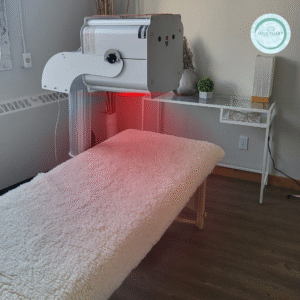
A treatment room with a soft, fleece-covered therapy bed and a large light therapy machine emitting a red glow. A glass table with plants and decor sits nearby, and a SoulTuary logo is on the wall.
A treatment room with a soft, fleece-covered therapy bed and a large light therapy machine emitting a red glow. A glass table with plants and decor sits nearby, and a SoulTuary logo is on the wall.
Illuminating Healing from the Inside Out
Step into the light. Feel its warmth—not like the sun, but like something deeper. Softer. A gentle energy that penetrates the skin, travels through tissue, and lands at the very heart of your cells. This is Red Light Therapy—a powerful, non-invasive treatment that speaks the language of the body’s own biology.
Also known as photobiomodulation (PBM) or low-level light therapy (LLLT), red light therapy uses specific wavelengths of red and near-infrared light to stimulate the mitochondria—the “powerhouse” of your cells. When the body is bathed in this light, cellular energy production (ATP) increases, inflammation decreases, and the body shifts into repair mode.
It’s not heat. It’s not UV. It’s light—pure, therapeutic, and backed by over 5,000 peer-reviewed studies.
How It Works: Light at the Cellular Level
Red light (typically between 620–750 nanometers) and near-infrared light (800–1100 nanometers) penetrate through the skin and soft tissue, where they are absorbed by cytochrome c oxidase, a light-sensitive enzyme found in the mitochondria. This activation leads to a surge in ATP (adenosine triphosphate), the fuel source for every healing and regenerative process in the body.
Increased ATP leads to:
- Enhanced cellular repair and regeneration
- Reduced oxidative stress and inflammation
- Faster recovery of tissues, muscles, and joints
- Improved blood flow and lymphatic drainage
- Stimulation of collagen, elastin, and fibroblast activity
Unlike traditional treatments that force the body to respond, red light therapy simply gives the body what it needs to heal itself—efficiently, naturally, and deeply.
The Experience: Gentle, Restorative, Transformative
During a session, clients sit or lie comfortably in front of a panel or within a full-body light bed. The light is painless—no discomfort, no noise, no side effects. Just warmth, stillness, and quiet activation.
Sessions typically last 10 to 20 minutes and are safe for all skin types. Most clients describe the experience as calming and energizing at the same time—a rare fusion of relaxation and vitality.
“Red light therapy felt like something clicked back on in my body—like I remembered what balance felt like.”
— Wellness Client
Whether you’re seeking recovery, radiance, or regulation, red light therapy offers something profound: a return to your body’s original intelligence—powered by light.
A treatment room with a soft, fleece-covered therapy bed and a large light therapy machine emitting a red glow. A glass table with plants and decor sits nearby, and a SoulTuary logo is on the wall.
A treatment room with a soft, fleece-covered therapy bed and a large light therapy machine emitting a red glow. A glass table with plants and decor sits nearby, and a SoulTuary logo is on the wall.
Red Light Therapy for the Body — From Inflammation to Illumination
When it comes to healing the body, the solution isn’t always force. Sometimes, the most profound changes come through nourishment, not intervention. Red light therapy doesn’t push the body—it supports it. It activates the intelligence already within your cells and invites them to do what they were designed to do: repair, regenerate, and thrive.
Inflammation Reduction and Pain Relief
One of red light therapy’s most documented benefits is its ability to reduce inflammation at the cellular level. Chronic inflammation is the hidden driver behind countless health challenges—from joint pain to autoimmune conditions. By improving mitochondrial function and circulation, red light therapy interrupts the inflammatory cascade and promotes balanced immune response.
A 2017 meta-analysis in Lasers in Medical Science concluded that low-level laser therapy significantly reduced pain and inflammation in both acute and chronic musculoskeletal disorders. Clients with arthritis, neck and back pain, or fibromyalgia often experience measurable relief within a few sessions.
“It’s like the inflammation just melts out of my joints. I feel lighter, freer in my body.”
— Red Light Therapy Client
Muscle Recovery and Performance Enhancement
Red light therapy is a trusted recovery tool for athletes, dancers, and physically active individuals seeking faster muscle repair and enhanced endurance. It accelerates muscle regeneration by increasing circulation, reducing oxidative stress, and supporting the growth of new muscle fibers.
According to a study published in The American Journal of Physical Medicine & Rehabilitation (2016), red light therapy applied post-exercise improved recovery times and significantly reduced delayed onset muscle soreness (DOMS) compared to placebo.
Whether you’re training for a marathon or simply carrying tension from daily life, red light becomes a non-invasive way to reset and repair.
Skin Rejuvenation and Wound Healing
Red light doesn’t just work beneath the surface—it transforms what we see in the mirror. It stimulates collagen production, elastin, and fibroblasts—key components in skin tone, elasticity, and texture. This makes it a powerful ally for:
- Reducing fine lines and wrinkles
- Fading scars, stretch marks, and age spots
- Healing acne and minimizing breakouts
- Improving skin hydration and overall glow
A landmark 2014 study in Photomedicine and Laser Surgery found that red light therapy significantly improved skin complexion and feeling of skin roughness, with visible results in just a few weeks. Wound healing is also accelerated, making it ideal for post-procedure care or injury recovery.
Circulatory Support and Cellular Oxygenation
By stimulating microcirculation and capillary growth, red light therapy enhances oxygen and nutrient delivery to tissues—supporting everything from detoxification to lymphatic drainage to cellular respiration. This increase in blood flow helps the body flush stagnation and repair damaged cells more efficiently.
Red light therapy isn’t just cosmetic—it’s core healing. It supports the body’s systems, restores vitality, and helps you move through life with less pain, more ease, and greater radiance.
Red Light Therapy for the Mind — Clarity, Calm, and Cognitive Awakening
Healing is never just physical. The mind carries its own inflammation—stress, overstimulation, and mental fatigue that accumulate quietly and erode our clarity. Red light therapy offers a powerful yet gentle antidote: a way to recalibrate brain chemistry, restore circadian rhythms, and return to mental stillness—all through light.
By improving mitochondrial function and balancing hormones, red and near-infrared wavelengths influence everything from sleep quality to emotional stability to cognitive sharpness. The result is a mind that is less reactive, more focused, and better equipped to navigate modern life.
Sleep Optimization and Circadian Rhythm Regulation
At the heart of mental wellbeing is rest. Without deep, restorative sleep, the brain cannot detoxify, process emotions, or regulate memory. Red light therapy has been shown to improve sleep by enhancing melatonin production, reducing cortisol, and re-aligning circadian rhythms—especially when used in the late afternoon or early evening.
A 2012 study published in Photomedicine and Laser Surgery found that female basketball players who received red light therapy nightly for 14 days showed significantly improved sleep quality and endurance performance. This suggests not only better rest—but better recovery of the mind.
“After just a few sessions, I was falling asleep faster and waking up clearer. It’s like my brain finally got a reset.”
— Red Light Therapy Client
Stress Reduction and Hormonal Balance
Light, like breath, is a regulator of stress. Red light therapy lowers levels of cortisol (the body’s primary stress hormone) and supports a return to parasympathetic balance—where the body and mind can rest, digest, and restore.
Regular use of red light therapy has also been associated with improvements in thyroid health, adrenal function, and hormonal resilience—especially in individuals dealing with burnout or high-output lifestyles.
When used consistently, clients often report reduced symptoms of:
- Anxiety
- Mood swings
- Brain fog
- Chronic fatigue
Mood Enhancement and Neurochemical Support
Red light therapy stimulates the production of serotonin, dopamine, and endorphins—the same feel-good chemicals targeted by many antidepressant and anti-anxiety medications. But instead of forcing a neurochemical shift, red light therapy works with the body’s natural pathways, helping it remember how to regulate itself.
This makes it a valuable adjunctive treatment for:
- Seasonal Affective Disorder (SAD)
- Mild to moderate depression
- ADHD and executive function challenges
- Post-traumatic stress or mental fatigue
While not a substitute for mental health care, red light therapy is emerging as a powerful co-therapy, creating a biological environment where emotional work can land and integrate more deeply.
Cognitive Clarity and Mental Performance
By improving cellular energy and oxygen delivery to the brain, red light therapy supports executive functioning, focus, and mental stamina. A 2013 double-blind study published in Neuroscience Letters showed that a single session of near-infrared light therapy significantly improved cognitive performance in healthy adults.
In today’s world of chronic distraction, this technology offers something rare: a path back to clarity.
Red light therapy is more than relaxation—it’s neurobiological nourishment. A daily, effortless ritual to keep the mind steady, the mood stable, and the spirit sharp.
A treatment room with a soft, fleece-covered therapy bed and a large light therapy machine emitting a red glow. A glass table with plants and decor sits nearby, and a SoulTuary logo is on the wall.
Red Light Therapy for the Soul — Returning to Radiance
Healing isn’t just about what we fix—it’s about what we remember. Who we are beneath the stress, beneath the skin, beneath the daily doing. In this way, red light therapy becomes more than a clinical modality. It becomes a homecoming—a return to stillness, energy, and the subtle spark that makes us feel fully alive.
While science can measure ATP, collagen, and serotonin, it can’t fully capture the energetic and emotional resonance of bathing in light. Many clients describe red light sessions as sacred pauses—spaces where the body rests, the mind stills, and the soul begins to glow again.
Light as Medicine, Stillness as Integration
In the quiet glow of red light, the nervous system softens. There is no force. No effort. Just presence.
The body opens to receive, and in that openness, deeper layers of the self become accessible—sometimes for the first time in years. This is especially powerful for those healing from burnout, grief, trauma, or depletion. The light is non-invasive, yet deeply personal—a reminder that restoration doesn’t always require intensity. Sometimes, it simply requires permission.
“It was like my body was absorbing more than light—it was absorbing safety, peace, and power.”
— Client Reflection
The Symbolism of Red: Grounding and Rebirth
Red is the color of root. Of blood. Of life force. It represents the first chakra—our connection to stability, safety, and embodiment. Red light sessions often evoke a sense of being grounded, held, and reconnected with the physical body—not from tension, but from trust.
For others, red is the color of passion, movement, vitality, and awakening. Many clients report feeling recharged, re-inspired, or emotionally reset after regular use. Some speak of tears surfacing during sessions, not from pain—but from the quiet knowing that something is finally shifting.
A Modern Ritual of Illumination
Red light therapy allows for a meditative experience, even for those who struggle with traditional mindfulness. Without screens or tasks, the body and soul synchronize. For those with spiritual practices, red light can become a ritual: a space to reflect, pray, breathe, or simply be.
Whether you view it through the lens of quantum biology or intuitive healing, red light therapy bridges the seen and unseen. It’s a conscious technology that reminds us: your energy matters. Your presence heals. Your radiance isn’t something you chase—it’s something you reclaim.
Red light therapy isn’t just about what you treat. It’s about who you become when you’re no longer in survival. A person who glows from the inside out. Not from hustle, but from harmony.
A treatment room with a soft, fleece-covered therapy bed and a large light therapy machine emitting a red glow. A glass table with plants and decor sits nearby, and a SoulTuary logo is on the wall.
A Practice of Radiance — Building a Light-Based Ritual for Lasting Wellness
Red light therapy is not just a treatment—it’s a practice. A commitment to showing up for your wellness in a way that’s gentle, intelligent, and beautifully sustainable. Like breath, hydration, or rest, it works best when it becomes part of your rhythm—not just your rescue.
As with most modalities rooted in cellular healing, the benefits of red light therapy compound over time. It’s not about intensity—it’s about consistency. Each session nourishes your body’s ability to heal, regulate, and perform… so that over time, you’re not just surviving—you’re glowing.
Why Consistency Creates Results
Mitochondrial health, skin regeneration, inflammation modulation, and nervous system recalibration don’t happen in a single session. But when the body is offered safe, repeated access to red and near-infrared wavelengths, it begins to remember its blueprint for wellness.
With regular use, most clients report:
- Deeper, more restorative sleep
- Smoother, brighter, more hydrated skin
- Less chronic pain or tension
- Greater mental clarity and energy
- Faster post-workout recovery
- A calm, focused presence that feels effortless
Clinical studies support this: whether for musculoskeletal conditions, cognitive function, wound healing, or hormone support, cumulative sessions yield stronger, longer-lasting results.
A typical recommendation for general wellness is 3–5 sessions per week for the first 4–6 weeks, followed by a sustainable maintenance schedule (2–3 sessions weekly). Sessions typically last between 10 and 20 minutes, depending on the treatment area and therapeutic goals.
Combining Modalities for Full-Spectrum Healing
At Soultuary Wellness Center, we believe true radiance is multi-dimensional. Red light therapy pairs beautifully with:
- Float therapy, for nervous system restoration and sensory integration
- Cold plunge, for contrast therapy and metabolic resilience
- Infrared sauna, for cellular detox and circulatory boost
- Breathwork or energy healing, for emotional processing and embodiment
Together, these services form a synergistic ecosystem of healing, where the body, mind, and soul are supported in every direction.
Whether you’re optimizing performance, addressing chronic conditions, or simply carving out sacred time for yourself, red light therapy becomes more than a session—it becomes a ritual of alignment.
Soultuary Membership and Access
We’ve designed our offerings to make consistency easy, accessible, and elevated. Whether you prefer drop-ins, packages, or full-spectrum membership, our team is here to help you build a routine that supports your goals and honors your rhythm.
You don’t need to burn out to earn rest.
You don’t need to be broken to justify healing.
You simply need to say yes to your radiance—and let the light do the rest.
References
- Hamblin, M. R. (2017). Mechanisms and applications of the anti-inflammatory effects of photobiomodulation. AIMS Biophysics, 4(3), 337–361.
- Barolet, D., & Boucher, A. (2010). LED photoprevention: reduced MED response following multiple LED exposures. Lasers in Surgery and Medicine, 42(2), 143–148.
- Zhevago, N. A., & Samoilova, K. A. (2006). Pro- and anti-inflammatory cytokine content in human peripheral blood after irradiation of different areas with visible and infrared polarized light. Photomedicine and Laser Surgery, 24(2), 129–139.
- Leal Junior, E. C. P., et al. (2010). Effect of 904nm low-level laser therapy in the acute inflammatory process: determination of the optimal dose. Lasers in Surgery and Medicine, 42(2), 163–170.
- Whelan, H. T., et al. (2001). Effect of NASA light-emitting diode irradiation on wound healing. Journal of Clinical Laser Medicine & Surgery, 19(6), 305–314.